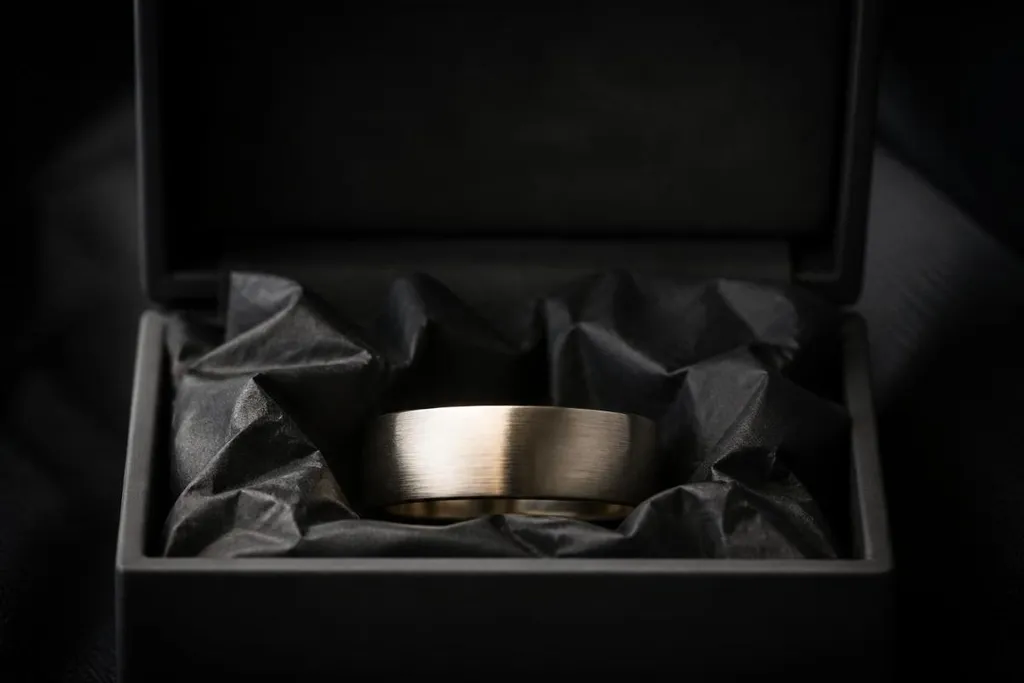
A wedding band may look straightforward, but it is one of the few pieces of jewellery likely to be worn every day for decades. Small decisions that seem insignificant at first band width, edge shape, metal weight or surface finish can have a considerable effect once the ring becomes part of daily life. For men who rarely wear jewellery, comfort can be just as important as appearance.
Exploring timeless mens wedding band designs is therefore less about finding one universally correct style and more about understanding how each detail affects the finished ring. Precious metals provide different colours, weights and ageing characteristics, while profile and width determine how substantial the band looks and feels. A well-chosen wedding ring should suit the wearer's hand, existing accessories and everyday routine without requiring constant thought or adjustment.
Choosing Between Platinum and Gold
Metal establishes much of a wedding band's visual character.
Platinum has a naturally white appearance and a reassuring density that many wearers associate with substantial fine jewellery. Rather than losing metal readily through everyday scratching, platinum tends to displace at the surface and gradually develops a characteristic patina. Some people appreciate this softer appearance, while others prefer occasional professional refinishing.
White gold provides another cool-toned option but has a different composition and maintenance profile. It is commonly finished with rhodium to create its bright white surface, which may require renewing over time depending on wear.
Yellow gold offers a warmer, traditional appearance and works particularly well for someone who already wears gold watches, bracelets or other jewellery. Rose gold introduces copper-influenced warmth and provides a more distinctive alternative while retaining the familiarity of precious gold.
The right metal is not simply the one considered most durable or luxurious. Weight, colour and expected maintenance should all suit the person wearing it.
Profile Has a Major Influence on Comfort
Two wedding bands of identical width can feel surprisingly different because of their profiles.
Court-shaped bands are curved on both the outer and inner surfaces. The rounded interior can reduce the sensation of sharp edges against the finger, making this profile appealing for someone new to wearing rings.
Flatter designs have a more architectural appearance. Their clean surfaces suit contemporary styling and can feel particularly appropriate alongside watches or accessories with similarly geometric forms. Softened edges can help preserve that modern look without creating an overly sharp feel.
Thickness matters too. A substantial ring can provide a satisfying sense of weight, but someone who works extensively with their hands may prefer a more restrained profile.
Trying several shapes is useful because comfort is highly individual. The profile that looks best in isolation may not necessarily be the one that feels most natural after several hours of wear.
Find a Width That Suits the Hand
Men's wedding bands are available across a range of widths, and this measurement strongly influences perceived scale.
A narrower band tends to feel understated and lightweight. It can suit slender fingers or someone who prefers discreet jewellery. Broader bands create a stronger visual presence and often feel proportionate on larger hands.
There is no requirement for a men's wedding ring to be particularly wide. Personal proportion matters more than convention.
Finger length should also be considered. A very broad band occupies more vertical space and can feel restrictive on shorter fingers. Conversely, a fine band may appear less substantial than expected on a broad hand.
Width can even affect sizing. Wider rings make greater contact with the finger and may feel tighter than narrower designs in the same nominal size. Accurate measurement with a band of comparable width is therefore preferable before ordering.
Think About Finish and Everyday Wear
A polished finish gives precious metal a bright, reflective surface and works well for both traditional and modern bands. Satin, brushed or matte finishes reduce reflection and can create a quieter, more contemporary appearance.
Whichever finish is chosen, daily wear will change it. Desk work, gym equipment, tools and ordinary household surfaces can all leave marks over time.
Those marks are normal rather than evidence that a ring is poorly made. Professional refinishing can restore a preferred surface where appropriate, although many wearers enjoy the gradual patina that develops naturally.
Lifestyle should also influence when the ring is removed. Heavy manual work and activities that could trap or severely impact the band are situations where taking it off can protect both the jewellery and the finger.
Final Thought
The best men's wedding band is not necessarily the widest, heaviest or most elaborate. Its success comes from how naturally metal, profile, width and finish work with the wearer.
Consider the ring as something that must perform every day rather than simply look impressive on the wedding day. A band that feels comfortable, complements existing style and ages attractively can become almost unnoticed in wear while remaining deeply significant—and that quiet combination is precisely what gives a wedding ring lasting appeal.